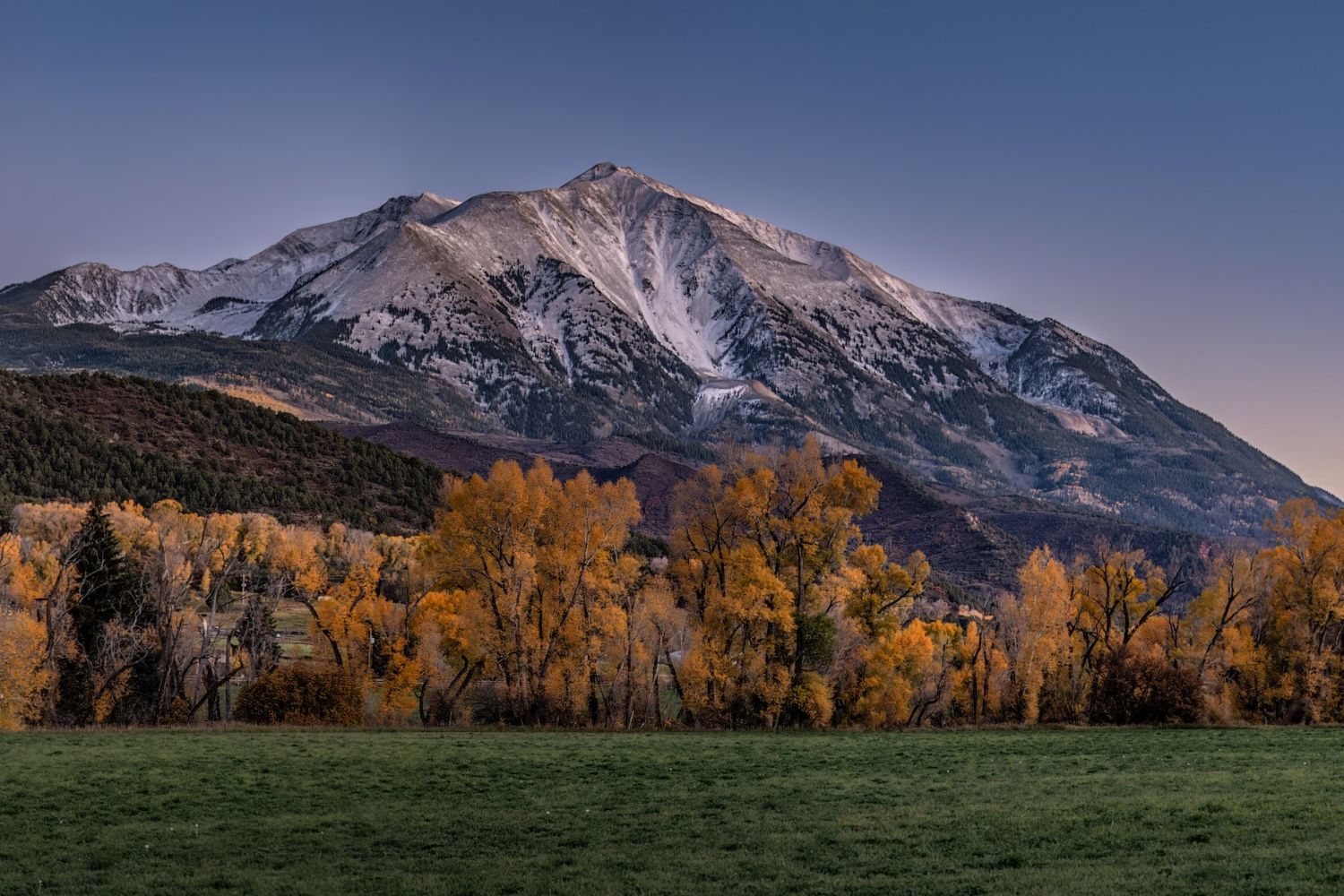
Nine years ago, we filled a barrel and waited.
That sentence sounds simple. It isn’t. In the craft whiskey world, nine years is closer to a generational timeline than a production schedule. Most small distilleries bottle in two, three, maybe four years — the economics of cash flow and the realities of a hungry market rarely allow for anything longer. So when a barrel sits, untouched and unbothered, for nearly a decade at 6,400 feet above sea level, it becomes something more than inventory. It becomes a long-form answer to a question that whiskey forums, craft spirits publications, and backyard distillers have been arguing about for years: does altitude actually affect whiskey aging?
Ask that question in three different places and you’ll get three different answers, usually delivered with total confidence. Reddit threads debate it. Industry panels dance around it. Craft distillery marketing copy often asserts it as settled fact, without much to back it up. The truth is messier and more interesting — there’s real science pointing toward “yes,” but very little real-world, long-duration data to show what that “yes” actually looks like in a glass.
That’s where Marble Distilling comes in — not with a theory, but with barrels. Sitting in Carbondale, Colorado, in the Roaring Fork Valley near Aspen, Marble has spent nearly a decade quietly running an experiment most distilleries never get the chance — or the patience — to run. At the center of it is Hoover’s Revenge, Marble’s flagship whiskey family, including stock that has now aged nine full years in new American oak, at altitude, through nine full cycles of brutal mountain summers and bone-dry winters.
This post is not a marketing claim dressed up as research. It’s the opposite: a measured, evidence-first look at what nine years of high-elevation aging actually produced, grounded first in the real science of why elevation might matter to a barrel of whiskey in the first place, then in the specific, extreme environment of Carbondale, and finally in the sensory results of the whiskey itself. Along the way, we’ll be honest about what’s still unsettled in this debate — because a defensible answer is more valuable than a tidy one.
Before we get to the barrel, though, we need to answer a more fundamental question: why would elevation matter to whiskey at all?
Does Altitude Affect Whiskey Aging? The Science, Explained
Start with air pressure, because that’s where the physical story begins. At sea level, the atmosphere presses down on everything — including a barrel of whiskey — with roughly 14.7 pounds per square inch of force. At 6,400 feet, that pressure drops meaningfully. A whiskey barrel is not a sealed container; it’s a porous, breathing vessel made of white oak, designed specifically to let liquid and vapor move through its grain. Change the pressure differential between the inside of that barrel and the world around it, and you change — at least plausibly — how aggressively the spirit moves in and out of the wood over time.
Pressure is only half the equation. The other half is temperature — and this is where Carbondale’s climate starts to look less like a scenic backdrop and more like an active ingredient. Traditional bourbon country, think Kentucky’s rolling hills, experiences humid, relatively moderate seasonal swings. The Rocky Mountains do not play by those rules. Carbondale sees scorching, dry summer afternoons followed by cold nights, and winters that swing from brilliant sun to deep, barrel-shed-rattling freezes. Each swing causes the oak staves to expand in the heat, pulling whiskey deep into the wood grain, then contract in the cold, pushing it back out, carrying extracted compounds with it. More dramatic swings mean a more active “breathing” cycle — and more breathing generally means more contact between spirit and wood over the same span of time.
Then there’s the piece every whiskey drinker has heard of, even if they can’t quite explain it: the angel’s share. This is the portion of the barrel’s contents — water, alcohol, or both — that evaporates through the wood every single year. In humid, lower-elevation climates, ethanol often evaporates faster than water, which can lower a barrel’s proof over time. But in dry, high-altitude air, the relationship can flip: water evaporates preferentially, and the remaining spirit can actually climb in proof as it ages. According to Wine Enthusiast’s reporting on how elevation affects aging spirits, high-elevation environments with greater temperature swings and drier air tend to produce more aggressive “pumping” of spirit into and out of the barrel staves, along with a larger — and compositionally different — angel’s share than what’s typically seen at sea level.
It’s worth pausing here to be honest about the state of the conversation, because overstating settled science is exactly the kind of marketing overreach this post is trying to avoid. Credible industry voices agree on the mechanisms — pressure, temperature swings, and evaporation chemistry are all real, measurable physical phenomena. Where they disagree is on magnitude: how much elevation actually changes the finished product, how consistently, and under what specific conditions. There is no single industry-wide consensus number, no universally agreed-upon “altitude aging multiplier.” The mechanics are well understood; the outcomes are still being measured one barrel at a time.
That distinction matters, and it’s exactly why Marble’s approach to this question has never been to assert a conclusion from a whiteboard. It’s to let barrels run the experiment in real time, in a real place, for real years — and then report, transparently, what came out the other side.

Which brings us to the place itself — because “high elevation” in the abstract is one thing. Carbondale, Colorado, in the thick of a Rocky Mountain valley, is something far more specific and far more extreme.
Carbondale, Colorado: An Extreme Place to Age Whiskey
Drive up Highway 133 toward Marble Distilling and you’ll understand, within about ten minutes, why this location isn’t a gimmick. Carbondale sits at 6,400 feet in the Roaring Fork Valley, wedged between Mount Sopris and the high desert plateaus that run toward Aspen. It is, by any honest measure, among the highest-elevation distilleries in the country actively aging whiskey at scale — not finishing barrels shipped in from elsewhere, but running a full aging program, start to finish, in this exact climate.
That climate is not gentle. Summer days in the valley can swing from crisp mountain mornings into dry, intense afternoon heat, often with a 30-plus-degree temperature differential between midday and midnight. Winters bring deep, sustained freezes punctuated by brilliant, high-altitude sun that can warm a south-facing barrel rick well above the surrounding air temperature, even in January. This is categorically different from the humid, more thermally stable conditions found in traditional bourbon-producing regions, where barrel rooms experience gentler, slower seasonal transitions. In Carbondale, the barrels don’t get a quiet off-season. They work year-round, through some of the most dramatic diurnal temperature swings in whiskey-producing America.
Water plays its own role in Marble’s story, even if it doesn’t directly touch barrel chemistry. Every spirit the distillery produces starts with water from the Crystal River watershed, the same glacially-fed system that carves through this part of the valley. It’s a detail that doesn’t change what altitude does to oak and spirit — but it does complete a larger, more honest story: this is not a sourced product finished with a local flourish. It’s 100% Colorado-grown grain, Colorado water, and Colorado elevation, combined from the very first step of production. Readers curious about how that full-circle approach compares to other high-altitude producers can explore more in Marble’s own breakdown of Colorado craft whiskey and what makes it different, where the distinction between “finished at altitude” and “made at altitude, start to finish” is laid out in full.
It’s also worth noting who designed this barrel program in the first place. Marble’s distilling operation is female-led, with co-founder and head distiller behind both the original recipe decisions and the long-term aging strategy that eventually produced a nine-year stock in the first place. Long-horizon barrel programs like this one don’t happen by accident — they require someone willing to tie up capital and inventory for the better part of a decade on the belief that the data would eventually be worth more than the immediate bottle count. That’s a technical and business decision as much as a creative one, and it’s foundational to how Marble thinks about whiskey: not as a quick-turn product, but as a patient, place-driven craft.
Readers who want to see where that patience eventually leads — into bottled, available expressions — can browse Marble’s whiskey collection page for the full current Hoover’s Revenge lineup, much of which traces its DNA back to the same barrel program discussed throughout this piece.
Understanding where this whiskey aged is only half the story. Now it’s time to meet the specific whiskey that’s lived in this valley longer than almost anything else in Marble’s barrel room.
Hoover’s Revenge: Nine Years in American Oak at Altitude
Every great whiskey has an origin story, and Hoover’s Revenge has one with real teeth to it — literally. The whiskey is named for a one-eyed coonhound, a scrappy, beloved presence around the distillery whose personality somehow became inseparable from the spirit itself: a little rough around the edges, completely unbothered by convention, and built for the long haul. It’s a distinctly Colorado story for a distinctly Colorado whiskey — made entirely from Colorado-grown grain, cut with Crystal River water, and aged exclusively in new 53-gallon American oak casks inside Marble’s barrel room at 6,400 feet. Readers who want the full tale, dog and all, can find it in the Hoover’s Revenge name-origin story.
Most Hoover’s Revenge releases reach the market between two and three years old — already a respectable aging window by small-batch craft whiskey standards, where cash flow pressures often push distilleries to bottle earlier than they’d prefer. But alongside those standard releases, Marble made a deliberate, almost contrarian choice: hold back a select number of barrels and simply let them keep going. Not for a planned marketing moment. Not for a scheduled anniversary bottling. Specifically to observe, year after year, what long-term high-altitude maturation would actually do to the liquid inside.
Nine years later, those barrels are still answering that question.
What does nine years at 6,400 feet actually do to a barrel? In measurable, observable terms: deeper wood extraction as the spirit cycles in and out of the oak through nine full years of extreme diurnal swings; visibly darker color development as tannins and wood sugars continue pulling into the liquid well past the point where most craft whiskey is already bottled; and a far more pronounced angel’s share, with meaningfully more volume lost to evaporation than you’d see in a standard two-to-three-year release. Each of those outcomes lines up with the mechanisms described earlier — pressure, temperature-driven wood breathing, and dry-air evaporation chemistry — except here, they aren’t hypothetical. They’re sitting in a specific barrel, with a specific fill date stamped on the head.
“Nine years ago, we filled a barrel and waited to see what the mountain would do to it.”
That’s the plain, unembellished truth of this project. Nine years is a meaningful outlier in an industry where most small-batch spirits are bottled well under five — which means this isn’t just a nice internal milestone. It’s a genuinely rare dataset. Very few craft distilleries, anywhere in the country, have maintained a single barrel program long enough, in a sufficiently distinct climate, to offer real before-and-after evidence on the altitude aging question. Marble has.

And this is where the online debate referenced back in the introduction stops being theoretical. This isn’t a forum post arguing about barrel physics in the abstract. It’s not a trade publication summarizing someone else’s lab results. It’s a barrel — one you could have tasted, aged in a documented location, under a documented climate, for a documented length of time.
So what did nine years actually produce? It’s time to open the barrel and find out.
What Nine Years Actually Tastes Like: Sensory Results
Pour the nine-year stock next to a standard Hoover’s Revenge release and the differences start before you even lift the glass. Color is the first tell: the long-aged whiskey carries a noticeably deeper amber, almost mahogany at the edges, the kind of depth that typically signals years of sustained wood contact rather than a quick extraction. That visual density isn’t an accident — it’s the direct, visible result of nine years of barrel breathing pulling tannins, vanillin, and wood sugars steadily into the spirit.
On the nose, the oak presence is immediate and assertive — more pronounced than in the two-to-three-year releases, with baking spice, dark caramel, and a faint char note that reads as mature rather than sharp. The extra years haven’t just added intensity; they’ve added integration, the kind of rounded complexity that comes from flavor compounds having enough time to fully marry rather than simply sit next to one another.
On the palate, the story shifts slightly toward concentration. Because elevated evaporation rates at 6,400 feet appear to pull water out of the barrel at a different ratio than they pull alcohol — a dynamic consistent with the dry-air evaporation chemistry Wine Enthusiast described in its reporting on altitude and spirit aging — the remaining liquid carries a more concentrated mouthfeel than you’d expect from a sea-level barrel aged the same length of time. Dark toffee and toasted oak lead, followed by a long, warming finish that lingers with dried fruit and a lingering spice note that simply isn’t present in the younger expressions.
None of this comes free, and it would be dishonest to pretend otherwise. Nine years at altitude means a significant amount of volume has been lost to evaporation — a real angel’s share, and a real cost. Fewer bottles come out of a barrel held this long, which is precisely why most producers, craft or otherwise, don’t make this choice. It’s a worthwhile tradeoff for the data and the resulting liquid, but it is a tradeoff, not a free lunch, and Marble’s measurable-claims approach to this whole project means acknowledging that plainly rather than glossing over it.

Experienced the way a guest would at Club Marble’s tasting bar — in a low-lit room, glass in hand, mountain air just outside the window — the nine-year stock doesn’t taste like a novelty or a marketing stunt. It tastes like time, specifically applied in a place where time moves differently through a barrel than it does in Kentucky, Tennessee, or anywhere near sea level. It’s worth repeating the caveat from earlier, because it’s the honest, defensible claim at the heart of this entire post: this is one distillery’s real, repeatable observation, offered as a genuine contribution to the broader “does altitude affect whiskey aging” conversation — not a final, industry-closing verdict.
Which raises a natural next question for anyone who’s read this far and found themselves curious rather than just informed: is there a way to be part of this story, rather than just read about it?
Age Your Own Barrel: The Marble Barrel Club Experience
There is — and it doesn’t require nine years of patience to get started, just a willingness to begin.
The Marble Barrel Club is Marble’s answer to a question that naturally follows a post like this one: what if you could watch — and eventually taste — your own version of the altitude-aging story unfold? The mechanics are refreshingly simple. Members select their spirit, receive a private barrel filled specifically for them, and that barrel ages on-site, inside the exact same barrel room, under the exact same 6,400-foot conditions, that shaped nine years of Hoover’s Revenge. It’s not a simulation of the process described throughout this post — it’s literal participation in it.
There’s something genuinely different about owning a barrel compared to simply buying a bottle. A bottle is a finished product; a barrel is a relationship. Members return over months and years, checking in on their barrel’s progress, watching color deepen, occasionally pulling a sample to track how their specific spirit is responding to the same pressure, temperature swings, and evaporation chemistry described earlier in this post — except now, it’s personal. It’s their fill date stamped on the head. Their choices about spirit type and timeline. Their own small chapter in the same long-aging experiment Marble has been running since that first barrel was filled nine years ago.

The Barrel Club doesn’t exist in isolation, either — it’s part of a broader, integrated hospitality experience built around Marble’s Carbondale location. Club Marble and the distillery’s on-site boutique inn round out a destination designed for guests who want more than a tasting flight; they want a weekend, or a return visit, built around watching this place and its spirits evolve over time. And for readers who care about the environmental footprint behind all of this: the barrel program operates within Marble’s broader zero-waste, WETS-supported production system, a sustainability commitment that runs quietly in the background of everything the distillery makes, barrel program included.
For those who’d rather start by tasting before committing to a multi-year barrel relationship, that’s a completely reasonable place to begin — Marble’s whiskey page offers the current Hoover’s Revenge lineup, built on the same high-altitude aging philosophy as the barrel program itself.
Either path — bottle first or barrel first — leads back to the same question this entire post set out to answer.
Conclusion: An Open Question, Answered One Barrel at a Time
So — does altitude actually affect whiskey aging? Based on nine years of real evidence at 6,400 feet, the honest answer is yes, meaningfully so, through the combined effects of lower atmospheric pressure, dramatic temperature swings, and a distinct, dry-air evaporation pattern that concentrates flavor and alcohol differently than sea-level aging does. That’s not a marketing claim. It’s what Marble’s longest-held Hoover’s Revenge stock demonstrates, tasted and measured, not theorized.
At the same time, it would be overreach to call this a closed case, and that’s not the spirit in which this post was written. The broader industry conversation remains genuinely unsettled on magnitude and consistency, and Marble sees its nine-year barrel program not as a mic-drop conclusion, but as one more careful data point in an ongoing, measurable experiment — one barrel, one fill date, one honest tasting note at a time.
None of this would be possible without the specific conditions that make Marble what it is: a full Colorado grain-to-glass production model, a female-led distilling program that was willing to let barrels run far longer than convention suggests, and a genuinely extreme high-elevation environment that most of the whiskey world simply doesn’t have access to. That combination — place, patience, and people — is what turned a simple question into nine years of real answers.

More barrels are aging in Carbondale right now, quietly working through their own cycles of mountain heat and freeze, adding to this story with every passing year. The experiment isn’t finished. It’s just getting deeper.
Taste the Evidence for Yourself
If nine years of elevation, patience, and Colorado grain has you curious about what’s actually in the glass, the best next step is simple: taste it. Shop Hoover’s Revenge and the full whiskey lineup online to experience the results of Marble’s high-altitude aging program firsthand.
And if you’d rather be part of the next chapter of this story instead of just reading about the last one, join the Marble Barrel Club and start aging your own barrel at 6,400 feet — the same mountain, the same conditions, your own fill date.
Must be 21 or older to purchase or consume. Please enjoy Marble Distilling’s spirits responsibly.
Frequently Asked Questions
Does altitude affect how whiskey ages?
Yes. At 6,400 feet, lower air pressure and wider daily temperature swings push spirit in and out of the oak more actively than at sea level, accelerating flavor extraction. The result is a rounder, more developed character in fewer years than a comparable low-elevation barrel.
How long is Marble’s whiskey aged?
Our Hoover’s Revenge expressions include stock aged up to nine years in oak at high elevation. Mountain conditions mean those years of maturation deliver more concentrated flavor than the same time would at sea level.
Why does high-elevation aging matter for flavor?
Thinner air and dramatic temperature shifts mean the whiskey “breathes” through the wood more intensely. This deepens color, softens the spirit, and pulls more vanilla, caramel, and spice from the barrel.
Does whiskey evaporate faster at altitude?
Yes — the “angel’s share” tends to be higher at elevation due to lower pressure and drier mountain air. We lose more volume per barrel, but what remains is richer and more concentrated.